Goal Questing – Story’s Adventurous Outcomes


todo-list-297195_640

The goals of our lives often masquerade themselves in the form of personal accolades, esteemed outcomes, alluring destinations and athletic’s teaming victories. The word goal is a four letter word for some. An, ‘I couldn’t make without them’ for others and a definite ‘must’ in the world of sports.

In reviewing the book, Crash Course in Storytelling by Kendal Haven, the word “goals” again appears in the multitude of letter-combining words and phrases on the pages in front of me. What! Goals? This is storytelling, not personal achievement, corporate conquest or athletic management; or so I alluded myself into thinking. But goals . . reading on, yes, of course goals, how simple! Stories are teaming with mischievous, magical, overachieving, dimwitted, crazed and deviant goal setters. The plot thickens with murderous intent; romantic conquest, riches unlimited; savory meals and hilarious, dim-witted drudgery. Goals spear a story forward into the eventful, how, where, when or why accolades of story’s unpredictable journey. Goals often comprise story’s navigational force and fortitude.

A trip down folktale lane sites a few infamous goal setting quest-ers and outcome adventurers:

The Three Billy Goats Gruff (Norwegian Folktale)

  • The grass is always greener across the bridge, if only that loud-mouthed goat-guzzling troll would step aside.

Little Snow-White (German Folktale)

  • Seriously, four accounts of attempted murder against your own seven year old child?
  • Wild boar organs with a dash of human never tasted so good.

The Emperor’s New Clothes (Denmark Literary Tale)

  • Royally paid, nameless tailors sell the king on their cutting-edge, custom-designed, fabric-less new cloths.
  • Less than royal street gawkers, wonder if they should enact legal precedence and have this royally acclaimed stripper arrested for inappropriate, flabby and pornographic  exposure.
  • The king’s choice to maintain his legally, royally approved presence while parading through town royally exposed.

Character’s goal setting and adventurous outcomes define story’s cankerous unfolding. Goals support listener navigation through the guided or misguided intentions of its outlandish characters.  They further help us step into character’s devious, mischievous, dimwitted, outwitted goal spearing adventures which lie ahead. Story’s plot is then built around the struggle, humor, adventure and wisdom of our goal quest-er’s journey.

Until next time . . . Let Your Storyographer’s Journey Continue!

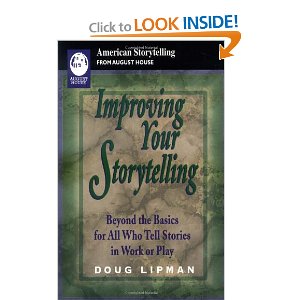
Improving Your Storytelling Beyond the Basics for All Who Tell Stories in Work and Play


Doug Lipman’s book Improving Your Storytelling is both comprehensive and inspirational. His work addresses virtually every aspect of storytelling from performer preparation, to audience interaction, listener significance, voice care, oral language exercises, story crafting and image enhancement. Being introduced to Doug Lipman’s work at the beginning of my storytelling journey, while written primarily for experienced storytellers, gave me an incredible introduction into both the dynamics and art of storytelling. A veteran in the field of Behavior Health and Forensic Therapy, I found the chapters on imagery and oral language vs written language invaluable in my work with clients and how story, professionally or personally crafted, is developed through repeated tellings and listener interaction. Lipman’s masterful explanation of his MIT (Most Important Point)formula greatly impacted my work in the behavior health field as well as inviting me to put “who I am” into my stories. His inspirational chapter on imagery further ignited my imagination in “trying on” various characters and what it might “feel like”‘ to become these alter egos. Reading his vivid, sensory filled words in the introduction to Snow White I sat back wondering, imagining . . . What if I were the evil Queen, peering through this ebony black defined window pain; staring intently into the mesmerizing back drop of winter’s whiting perfection, my heart welling with the immense satisfaction of my husband’s timely demise . . . ! Then moving from here into the inner essence of each character in the story. Wow! What an incredible experience and insight into the breathing life dynamics of story interlaced with the interactive nature of storytelling. A must read for anyone desiring to expand their awareness and skills in the areas of oral language, imagery, and story as well as the dynamics and art of professional storytelling.

Thank you Doug Lipman for this comprehensive, dynamic and inspiring guide into the field of storytelling!


Until next time . . . Let Your Storyographer’s Journey Begin!

Folktales Impacting Nature’s Conservation


botoFor centuries stories and storytelling have played critical roles in preserving, transmitting and changing cultural standards and values on to its people. Storytellers, once high-ranking on the “Most Wanted” to be captured list for invading armies. Too, highly paid entertainers in the local lavatories – I guess if you are just sitting there, you might as well be entertained! Storytellers, the keeper of the stories, the newscasters, the culture bears, the genealogists and the historians of ages past.

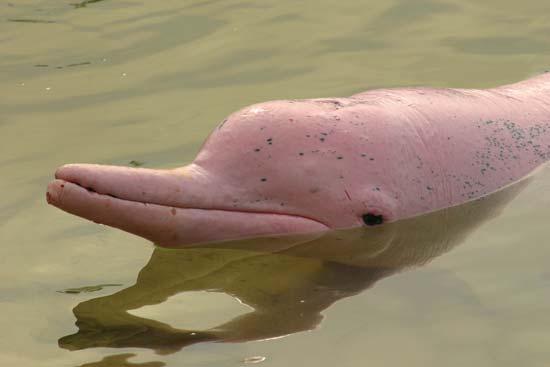
While researching some of the folktales for my Bug-a-Bration Bug Swapin’ Tale and Tunes and Luminous Lagoon: Buggy Tales and Tunes I became acutely aware of how much of the rain forest in different had been destroyed in my lifetime. In crafting the story-line and the Afro-Caribbean folktales for two kids storytelling CD’s, I developed these stories around  the geological context of the type of rain forests in the countries where the stories were told. After collecting basic information on the history of the rain-forests, their endemic and endangered species, including insects, and other fun plants, I began adding them in to the story-line, as a tribute to these amazing creatures and the world they live in, as well as honoring the integrity of these stories. As a result, I got to meet wonderful creatures such as the boto, pictured above, or the pink river dolphin found in the Amazon rain forest as well as black pineapples, lemon tasting termites and the Victoria Rega, a six-foot giant waterlily. In the limestone rainforest of Jamaica ; the lampid firefly, stinking toe trees and cho cho’s, as well as Luminous Lagoon in different section of the island.

Through my research I learned that the Amazon river’s Boto, or pink river dolphin, is endangered.  Local stories and legends gave the people warnings of what might happen if they did not take care of the river. For it was said if anyone hurt the river in any way, the Boto  would come to the land in the form of a human. In this new form, the Boto would visit the village of the offender and cause unwanted pregnancy,  war and other types of illnesses as punishment for hurting her waters. One Amazonian man interviewed wisely said: “When people stopped believing the folktales and legends, they stopped taking care of the rivers and the land.”

Until next time . . . Let Your Storyographer’s Journey Begin!

Telling a Story? – Tips and Tidbits!


A storyteller, though voice and jester, invites people to join him/her on a guided tour of images, the place where a story begins, change happens and where life or someone’s awareness will never again be the same: knowing that the beginning will never be the same as the ending.

  1. Choose a story, myth or tale that you love – if you don’t love it, don’t do it. Ask your self, why do I love it? Why is this important for me to tell? What is the most important part of this story to me?
  1. If it is a myth or a folktale, then look it up in other sources – book and/or audio. Every storyteller adds his or her own unique style and flavor to a story. This might give you some more ideas as you work up your own version. Try reading it out loud to yourself or to a friend to hear the cantor of the story.
  1. Make an outline of the key events. Know your story – never memorize it. Remember every story has a beginning, something that happens that changes everything, now what – how life is different from when the story started.
  1. Practice by telling a friend or a family member. The more you tell it in front of others, the better your story becomes. Watch your story grow and come alive as you “listen” to what your audience is hearing.
  1. Become familiar with and research key elements in your story – main characters, geographic locations, plants, animals . . . Or try changing the setting or the main character in your story ie, retell it from the mouse’s, wicked step sister’s or tree’s perspective. Maybe the tortoise and the hare decided to race through the plumbing in your school!
  1. Review your original sources. It is important to keep the integrity of the storyline.
  1. Remember the ending to your story.  That way you know were you are going.
  1. Have fun. If you love what your are doing and love your story, your audience will too!

“The mythology of Greece survived for centuries before Gutenberg invented the printing press. To know the stories, one had only to listen to keepers of tales – the storytellers. Today, because we no longer need to rely upon the spoken work to know the stories, we forget that they were vividly entertaining vehicles of culture in a pre-reading era. The best written versions, I believe, remind us once again of the oral power of the ancient myths.” Barbara McBride-Smith in her book Greek Myths Western Style: Toga Tales with an Attitude.

Greek Myth's Western Style

Until next time . . . Let a Storyographer’s Journey Begin!

Stories – Images – Crafting the Stories of Our Lives!


A friend, an incredible friend showed me a bench he made, a simple, yet eye-catching blend of curved lines, legs extending  inward, forming a eye-catching bench. I smiled at the quality of his workmanship, the ah in his eyes, a job well done.

His image, his pride, his success in his craft. Images flood my mind. So often in the role of storyteller, social worker, life living individual on the earth plane. How often I forget to take time to develop an image, a goal, a destination in my own life for the things I truly desire. So at the end, I too can uphold the end result in pride, quality of a job well done.

Thank you for the lessons of work well done, an image provided direction and a celebrated outcome.

What is the image you hold in your mind today? What project, idea or goal do you have and what image do you add as your desired outcome? What is your story today and the large story for tomorrow? Images are the key to stories, images are the key to shaping the stories of our lives.

Hum . . . to an imaged filled day with celebrated results!

Until next time . . . Let a Storyographers Journey Begin!

Re-visualizing Bank Robbery’s Painful Replays


Wow! I was so honored by some many courageous people re-entering the workplace following a robbery. These courageous people went on to share their stories of what happened, how it effected them and how life is now different for them. So many individuals talked about the images, replaying the images of the robbery in their mind. A very normal response, for the moment.

Images, the foundational fabric of storytelling, their imprints on our minds eye and their impact on our lives. Maybe it is time, in our minds eye, to change the ending, or even the beginning. No one has the right to take up space in any one elses mind.

Yes, it is true, the armed robbers jumped the counter and instructed tellers to line up by the vault. No one ever expects a robbery to happen, but at that moment it did. Laying awake at night, or even during the day, seeing the robbers coming over the counter leaves one in a continue state of feeling powerless and vulnerable. Finding the courage to acknowledge that you did exactly what you needed to, knowing that you have nothing to do with the robber’s desire for the bank’s money, then changing the course of action in your own mind.

Hum, robbers entering the building at the precise moment the sheriff walks in to deposit his paycheck. The robber’s now startled, pause, pausing  just long enough for you to hit the silent alarm button. panicked, the robber runs out the door, with out the cash, unexpectedly  into the backseat of a local police car. A smile crosses your face as you watch the police car fade out of sight on its way to the police station.

The stories people tell have a way of taking care of them. If stories come to you, care for them and learn to give them away where needed. Sometimes a person needs a story more than food to stay alive. That is why we put these stories in each other’s memories. That is how people care for themselves. – Barry Lopez

Until next time . . . Let a Storyographer’s Journey Begin!

www.storyographers.com

Poetry Spirations – Oral Tradition


nib-153747_1280Thank you Jerry Neal for your inspirational interview and insights!

I had the incredible opportunity to speak with Jerry, a local poet and author on the subject of oral tradition, the similarities and differences on how poets and storytellers craft their work and what inspires him.

Jerry, smiles, leaning slightly forward in his metal handled chair, recalling an instance when a poet, at a poetry reading, attempted to read a poem that he had not read in almost twenty years. The result was a flattening, lifeless experience for both writer and audience members alike! Shaking his head, Jerry wondered what the poet might have thought, feeling, imagining when they wrote this piece of poetry. He wondered how this poem touched that person’s life, their heart, and what inspired them to write it to begin with. He further talked about wondering what the impact of the poems phrases felt like when this person was writing the poem and how this again comes through in the reading of this poet’s work through the reader’s diction, rhythm and meter of their voice.

I too had to smile! Jerry’s words ignited my inner awareness, enthusiasm and reflections in the art of storytelling and the artistry of story development. How does the story touch me? What images are going through my mind’s eye as I retell this story? What feelings and emotions are part of the story, the characters and the reality of their lives? How is my voice, my jesters and other personal expressions reflect specific aspects of the story and its story-line? Why is it important to me to tell this story? How does this story benefit the audience? How do I benefit from telling this story?

In extended appreciation to Jerry Neal, local author and poet!

Jerry’s book; Collected Poems are found at:
http://www.amazon.com/Collected-Poems-Mr-Jerry-Neal/dp/1499716583


Until next time . . . Let Your Storyographer’s Journey Begin

The Power of Story Within – Storyteller Bill Harley


The power of story truly lies inside each one of us.


Images ignite our stories and link us with our audiences and transform our lives.


Until next time . . . Let Your Storyographer’s Journey Begin!