
New Road – 5 Chapters in Life


FutureI heard this incredible story in a presentation from Dr. Wayne Dyer, wishing that I remembered the author, but honored to have heard it.

At a seminar, participants were asked to write five chapters of their life on five separate 5 X 7 index cards. This woman’s story went approximately as follows:

Chapter 1

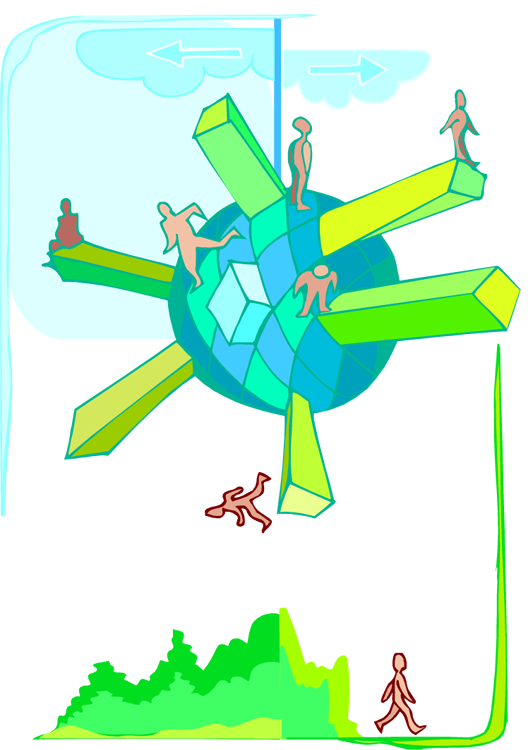
I walked down the road, never saw what was coming and fell into a hole. I was angry, bitter and blaming. It took me a long time to get out.

Chapter 2

I walked down the road, I a saw the hole, I fell in. I was angry. How could anyone leave a whole this size here? How come they did not fix it? Why don’t they have it blocked off  . . . It took me a long time to get out.

Chapter 3

I walked down the road, I saw the hole and I fell in any way. This time I knew it was of my making. This time it took very little time for me to get out.

Chapter 4

I walked down the road. I saw the hole. This time I walked around the hole and continued on down the road.

Chapter 5

I walked down a new road.

What an awesome story to tell!

Until next time . . . Let Your Storyographer’s Journey Begin!

Story’s Destination: Ending at the Beginning


destination-1285851_1280

For any of us, it is easier to get where we are going when we know where we are going. Knowing your destination begins your travel plans, knowing there is an infinite number of ways determining how and where you can arrive.

In developing your story, know your ending. Once you know the ending, decide on where you are going to begin.

Looking back, how did you get here?
Where there some type of goals, plans, affirmations, dreams, bucket lists involved in the journey and/or destination?
Who or what were your biggest helpers? . . . OR . . . Who do you want to hug?
Who or what were your biggest story saboteurs and why? . . . OR . . .Who do you want to strangle?
What kind of terrain(s) did you have to travel through?
Did you meet any helpers or any messing creatures along the way?
Does this journey involve an magic or enchantment of some kind?
Does your journey take one unexpected places such as; sewers, building pipers, inter-connecting anthills or . . . ?

Like any of us, once we know where we are and where we are going creativity drives the vehicle of our arrival.

Having a set and established destination opens up new possibilities of where you can start your story and the multitude of ways that you can reach your ending. As long as you know where you are going, all roads lead here. Memorizing a few key sentences signifying the end of your story’s adventurous can also be helpful in assuring a smooth landing. Disruptions, distractions and other types of things are apart of life, even temporarily forgetting where you are in your story. Again, like a great road map, knowing your ending means you know where you are going; it really doesn’t matter how you get there, as long as you arrive and enjoy the ride.

In preparing for a performance, it is often easier to learn the ending before the beginning as it takes longer to get to the end than it does the beginning. A solid ending ensures more direct traveling and minimizes the chance of getting “lost” along the way.

Whether or not you are planning your next vacation or working up a great story,  start from your destination or the ending of your story. Instead of heading there, be there. While you are there, think about how you got to where you are going.

Until next time . . . Let your Storyographer’s journey begin!
Atmosphere – Story’s Presence


Charlie “Tremendous” Jones’ company at the end of a film clip states: “Atmosphere doesn’t just happen. It takes the human mind to create atmosphere.”

lion-617365_1280Atmosphere, the mode or the ambiance enveloping an individual or group of people such as; relief, uncertainty, fear, tension, romantic, chilling, humiliating or terrifying. Atmosphere also defines the gaseous envelope surrounding the planet earth. Atmosphere a powerful word. In the art of storytelling and the artistry of story development, it also means the establishment of a the prevailing mood or tone of a character and their impact on the people and events in the story’s story-line.  Atmosphere, setting and plots have a few interconnecting points or maybe potholes, depending where in the world you live, as each significantly impacts not only the characters within the story, but the storyteller and their audience members receiving the story.

You, the storyteller set the atmosphere of your story. You too both set and bring forth the atmospheric gauges of the character’s within your story. In the story you are telling, ask yourself: “What is the dominate atmosphere of my main characters? What happens when they enter a room? What changes in the mood or the tone of conversations or the general activity of the people around them? How does the atmospheric presence of these characters impact me, the storyteller? Atmosphere has the power to impact the mood and tone of the people around you.

Play with your character’s atmospheric gauges. Strong atmosphere is expansive and envelopes the audience.

But . . . Waite, aren’t we like that too? How many times have each one of us walked into a room of people and impacted the tone, the mood and the feelings of a single individual or the group of people? Atmosphere is power. What type of powerful impact are our characters making in your story? What type of powerful impact are you making your audience members?

Until next time . . . Let Your Storyographer’s Journey Begin!

Cinderella’s Personal Transformation Story


glass slipperYesterday tells the story of our past. Today tells the story of our future. A quick review of history’s recorded story transformational artists. So many examples, where to start! Oh yes, Cinderella, our beloved story transformer, making her story variants known in virtually every culture throughout the world! Hum, daydreaming about the Prince? A great place to start!

Hanging out in the cinders of life’s entertaining decades of story scripts:

  • “Wow, I must not be good enough, if I just work harder they will like me.”
  • “Yes, I will just keep working harder and harder. Of course they will like me.”
  • “Yes, I am an adult now, but maybe if I work even harder than I ever did before, then they will surely, hands down, for certain like me.”

That Prince daydream? He is going to be at the ball! Yes, the very same all invited Kingdom rocking ball! Wow! I get to see him at the ball! Yes, the ball! I just know that if I work extra hard, make my own dress from the materials of my past, I will meet the Prince in person!

“What, you mean you will never like me. I will never be good enough? Being good enough in your eyes was never an option? You are not going to let me get to the ball? But the Prince, the one I have dreamed about all my life, he, he is at the ball and will soon be married! NO!!! He just can’t get married with out me!”

What do I do next? Hum . . .Clean the floors! Oh, I have done that millions of times before. Ah, wash the clothes! Oh, I did that twice today all ready. Hum, mow the lawn! Oh, I do that every day. Hum . . . cleaning, mending, raking, scrubbing . . . Oh, I do that everyday, in the same place, for the same people. But the ball, the ball is happening right now in a different place where someone else does all the mending, cleaning, mowing, scrubbing . . . The Prince, he just can’t get married with out me!”

Walking out the front door – Wow! There are houses and people out here! Looking around, at the edge of the property sits a women never seen before. A glaze, a sparkle . . . a new story of belief, a new story of life’s personal transformation has begun! It is a good thing too, or the Prince would have gotten married without me!

Remember, please take immediate  inspired action on your life’s magic wanding moments. Some offers expire at midnight tonight!

To the images, the dreams of our stories can become the adventurous of our day!


Until next time . . . Let Your Storyographer’s Journey Begin!

Telling a Story? – Tips and Tidbits!


A storyteller, though voice and jester, invites people to join him/her on a guided tour of images, the place where a story begins, change happens and where life or someone’s awareness will never again be the same: knowing that the beginning will never be the same as the ending.

  1. Choose a story, myth or tale that you love – if you don’t love it, don’t do it. Ask your self, why do I love it? Why is this important for me to tell? What is the most important part of this story to me?
  1. If it is a myth or a folktale, then look it up in other sources – book and/or audio. Every storyteller adds his or her own unique style and flavor to a story. This might give you some more ideas as you work up your own version. Try reading it out loud to yourself or to a friend to hear the cantor of the story.
  1. Make an outline of the key events. Know your story – never memorize it. Remember every story has a beginning, something that happens that changes everything, now what – how life is different from when the story started.
  1. Practice by telling a friend or a family member. The more you tell it in front of others, the better your story becomes. Watch your story grow and come alive as you “listen” to what your audience is hearing.
  1. Become familiar with and research key elements in your story – main characters, geographic locations, plants, animals . . . Or try changing the setting or the main character in your story ie, retell it from the mouse’s, wicked step sister’s or tree’s perspective. Maybe the tortoise and the hare decided to race through the plumbing in your school!
  1. Review your original sources. It is important to keep the integrity of the storyline.
  1. Remember the ending to your story.  That way you know were you are going.
  1. Have fun. If you love what your are doing and love your story, your audience will too!

“The mythology of Greece survived for centuries before Gutenberg invented the printing press. To know the stories, one had only to listen to keepers of tales – the storytellers. Today, because we no longer need to rely upon the spoken work to know the stories, we forget that they were vividly entertaining vehicles of culture in a pre-reading era. The best written versions, I believe, remind us once again of the oral power of the ancient myths.” Barbara McBride-Smith in her book Greek Myths Western Style: Toga Tales with an Attitude.

Greek Myth's Western Style

Until next time . . . Let a Storyographer’s Journey Begin!