Igniting Images Engage Listeners


19976402Thank you June Barnes of the Australian Storytelling Guild (Vic).

“Well, the story reaches out and touches each listener in a different way. Like an omniscient, it knows each individual’s needs at any given time. It will either speak to a need in the listener or brush by with a caress, or a tap on the shoulder.

The story can act as a catalyst in commencing the process of solving an emotional problem, enlightenment, preserving a culture, helping another, bonding families or communities. The story can generate the healing power of laughter and assist in the education process. Sometimes the story is a trickster, it pretends to entertain just to get inside the psyche, and then it jumps up at the listener with a timely message.

It seems there is no end to the power of the story to seek out that searching part of an individual’s psyche and touch it.

But do I, as the storyteller, know what the story is giving to each listener? No, I am not extended that privilege. Only the story and the listener know this. But wait, sometimes the listener doesn’t even know. The story sneaks in and finds a place to rest and then awakens at the appropriate time in that person’s life. So the story IS the dominant partner.

What about me then, the storyteller, what contribution do I make in this marriage? Well I provide a vehicle for the story to come to life. But the same can be said for singing and other mediums of presenting a story. How am I, as an oral storyteller, different? Am I different? Please say Yes! Well… as an oral storyteller I do act as a personal communicator, I form a personal relationship with the listener. The listener knows me, or a part of me, through the story. Is that my contribution, to assist in preserving the personal relationship in society? Is the listener more (or less) receptive to the story because of the personal nature of the relationship between teller and listener? Is that what makes oral storytelling unique?

Perhaps not! A singer, musician or dancer also establishes this personal relationship.

But do they allow the story to develop and mature because of the interaction between the teller and the listener. In other words do they give the story the freedom to live. Do those other methods of presenting story allow the story to change, in the way a living organism changes, according to the circumstances and community it finds itself in?

Perhaps this is the element which allows oral storytellers to claim their medium as unique. Perhaps, as the storyteller, my role in this marriage is not so passive after all.”

In oral tradition, the story grows inside the teller the more the storyteller tells the story to others. Stories come to live in the presence of a listener or listeners, for without them, a story can never become a reality. Responsive listeners allow us, as storytellers, to see what our audience members are hearing. Storytelling is also interactive, therefore, by its nature, stories require the presence of listeners as well as a storyteller. A storyteller is not a teacher, a preacher, a counselor or a reporter. A storyteller is simply the teller of a tale. How the power of story touches or impacts its audience members is up to each individual’s unique interaction with the story and its storyline.


Until next time . . . Let your Storyographer’s journey begin!

Our Stories Reveal Who We Are


portrait-119851_640

“I do this exercise in my seminars where a person speaks for five minutes about someone who has been very important in their life who has been very important in their lives. I then ask the listeners to write down what they conclude about the speaker. I am not asking about the person the speaker talked about; I am asking about the person who was speaking. It is amazing how much people can conclude from listening only 5 minutes to someone they have never met. People are able to make statements about what the speaker values and what they would be like to work with. When I share the assessments with the speaker’s co-workers or family, they attest to how on target the assessments are.  . . People rarely understand that they tell people who they are every time they talk. ” Linda Garbe

“Once you understand that you will reveal yourself when you tell a story, the next thing to accept is that “here is a mental discipline need to develop to tell a good story. One has to have time and commitment to shaping a good story.” (Denis Bertrand) Except taken from How to Tell a Great Story by Aneeta Sundarara.

The stories we tell are about ourselves whether they are folkloric or life-loric. In the world of storytelling, select a story that you love. Find out who you are in this story and why it is important for you to tell it. Also, is it something your audiences will love to hear?

The images of our lives from the homes and towns we live in to the people we meet along the way often become the images and characters of our stories. Since we are already telling people who we are every time we speak, in the art of storytelling and the artistry of story development, why not be the person we truly are? When we embrace this reality and step further into the reality of our stories, again identifying who we are, we more consciously and with greater confidence, step into the into the vivid reality of our story the unique expression of our voices.

Until next time . . . Let Your Storyographer’s Journey Begin!

Story Navigation – Heart to Heart


wings-1885534_640
Story – the place where life is as it is; Change Happens – a new normal unfolds.

Story; a taste of heart a touch of love. A juicy, creatively bubbling throb wells up from within. Storyspirations ignite the brain’s image-filled imaginations. Then it happens. Ideas talk. You talk. Others listen.

A Story begins in the heart, travels up through larynx’s vocal accordions.  Once released, for those willing to receive,  this story finds its new, heartfelt home in the pulsating arteries and rhythmic chambers of yet, another’s heart. Story’s vivid realism and outrageous adventurous as wildly zanny as any of us are.


In the wisdom of the ancients, Chinese Medicine sites the lips and hands as the heart’s external, visible components. By extending a hand or a kiss, we let others know; welcome, from my heart to yours.

Through some heart reaching research, the Heart Math Institute researchers found proof of the brain’s neurotransmitters hanging out not only in the brain but also on the heart. Upon wombs egg hatching fertilization, it’s the heart which tells the brain when it’s time to develop. Definitely one of those awkward ‘who’s really in charge’ type of moments. Life is experienced first through the heart, then transmitted to the brain for more in-depth analysis and processing.

When choosing to develop and tell a story, select one which excites your toenails, tickles you earlobes and ruffles your eyebrows. If you don’t love, don’t tell it. Every story we tell is apart of us, a part of who we are, apart of our heart’s experiences. The more enthusiasm, the more romance, the more love we have for our stories and their awe-inspiring adventures, the easier it is to tell. By living in the heart of the moment of the story’s life living reality, we naturally delight and engage our listeners.

So join us in extending a hand, embracing a kiss and/or sharing a story as a gift from our hearts to yours.

Until next time . . . Let Your Storyographer’s Journey Begin!

Words: Do They Speak the Same Language?


Words, the only thing that oral language and written language have in common, yet each one possessing their own kind of life impacting, story filled magic!

Word, a unit of language, consisting of one or more spoken sounds or their written representation, that functions as a principal carrier of meaning.

Storytelling – oral language, expressing the timelessness of now, connecting life’s passing moments to future’s infinite streams of possibility.  Voice’s heart sinking, unspoken meaning: That tone – busted, no further explanation required. The “wave of fear” – courtroom’s witnessing verdict. “I love you” between two lovers in passionate embrace. Human expression, gestures, eye contact, voice tone, facial characterization and physical language takes one beyond the scribed letter of any written word.

Literature – the written word: “All the magic of writing is conveyed with those five kinds of elements. All the passion, logic, imperiousness, inevitability and humor of written language is shaped, like sculpture, from the simple clay of words, punctuation, typography, pictures and materials.” Master Storyteller Doug Lipman

Until next time . . . let a Storyographer’s Journey Begin!

Goal Questing – Story’s Adventurous Outcomes


todo-list-297195_640

The goals of our lives often masquerade themselves in the form of personal accolades, esteemed outcomes, alluring destinations and athletic’s teaming victories. The word goal is a four letter word for some. An, ‘I couldn’t make without them’ for others and a definite ‘must’ in the world of sports.

In reviewing the book, Crash Course in Storytelling by Kendal Haven, the word “goals” again appears in the multitude of letter-combining words and phrases on the pages in front of me. What! Goals? This is storytelling, not personal achievement, corporate conquest or athletic management; or so I alluded myself into thinking. But goals . . reading on, yes, of course goals, how simple! Stories are teaming with mischievous, magical, overachieving, dimwitted, crazed and deviant goal setters. The plot thickens with murderous intent; romantic conquest, riches unlimited; savory meals and hilarious, dim-witted drudgery. Goals spear a story forward into the eventful, how, where, when or why accolades of story’s unpredictable journey. Goals often comprise story’s navigational force and fortitude.

A trip down folktale lane sites a few infamous goal setting quest-ers and outcome adventurers:

The Three Billy Goats Gruff (Norwegian Folktale)

  • The grass is always greener across the bridge, if only that loud-mouthed goat-guzzling troll would step aside.

Little Snow-White (German Folktale)

  • Seriously, four accounts of attempted murder against your own seven year old child?
  • Wild boar organs with a dash of human never tasted so good.

The Emperor’s New Clothes (Denmark Literary Tale)

  • Royally paid, nameless tailors sell the king on their cutting-edge, custom-designed, fabric-less new cloths.
  • Less than royal street gawkers, wonder if they should enact legal precedence and have this royally acclaimed stripper arrested for inappropriate, flabby and pornographic  exposure.
  • The king’s choice to maintain his legally, royally approved presence while parading through town royally exposed.

Character’s goal setting and adventurous outcomes define story’s cankerous unfolding. Goals support listener navigation through the guided or misguided intentions of its outlandish characters.  They further help us step into character’s devious, mischievous, dimwitted, outwitted goal spearing adventures which lie ahead. Story’s plot is then built around the struggle, humor, adventure and wisdom of our goal quest-er’s journey.

Until next time . . . Let Your Storyographer’s Journey Continue!

Armed with Nothing but a Handful of Quarters . . .


parking-meter-828887_640-1

Every day brings each one of us so many unique and amazing stories to both share and tell!

We have all been there. Watching our time pieces in fear of the dreaded swing of the parking meter’s arrow. Its ill-fated consequences should we dare go over our allowed, pre-paid time limit. Looking at our watches, we gasp. It’s later than we thought and the metering meter is farther than expected. Rapidly surveying all possible. all most immediate and all practical building entrance and exit options and wishing we had a spare parachute for just such an emergency, we run.

Torn between the professionalism of our trades and the desperation of meeting our doom at the hands of an unknown, often unidentified ticket bearer, the second option talks the lead. Choosing to leave rigid and motionless clutches of professional uncertainty the metered race continues. Unstoppable we race down towering flights of stairs, across semi-vacant rooms littered with people and through hinged doors. Coming face to face with the elements we race on. Our goal, to get there before anyone else does, with our pocket full of quarters.

Yet, unknown and never will be known to any of us, a man, in a simple brown suit armed with a hand full of quarters secretly and effortlessly impedes on the city’s parking violation funds. Without a cape, or a telephone booth to aid in his hidden identity changes he stealth-fully walks down the street, one parking meter at a time. Coming around the corner, continuing on to the road ahead, he stops. He stops next to metalized chunk of rubber-wheeled, motorized containment, called transformation. The very kind and the very one that got you to your current location. Like those meters before, he once again drops in a small handful of quarters just seconds before the parking meter’s ill-fated, needle pointing, predetermined expiration times. Hat’s off and flags a waving to this mysterious man in brown, who walks just footsteps ahead of city’s hired, meter-ticketing collections agent.


Until next time . . . Let Your Storyographer’s Journey Begin!

Story Harvest – Daily Conversations


24034069-circuslionsI love sitting around large gatherings of people and listening in to their conversationally inspired memory flashes. A treasured garden filled with ripening, story igniting images.

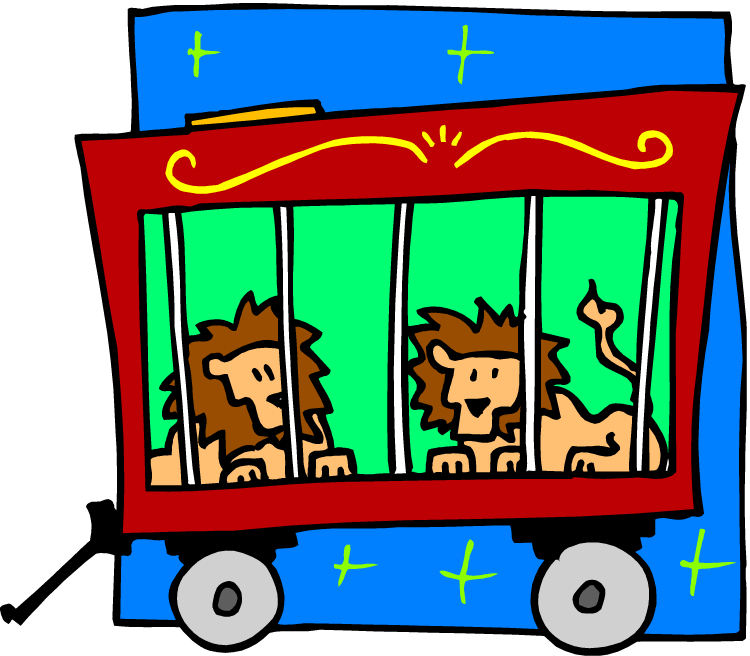
A grow man, with two teenage sons of his own shares his father’s first known driving experience. “My Dad got his first truck driving job when he joined the circus. The work was hard, but in these days, work was work and most people didn’t have it. Early morning routines consisted of shoveling manure, setting up tents, wooden planks for audience seating and generally, what ever else needed to be done. The key to having a good job and keeping it is doing what ever your boss wants you to do. I still remember the time when they needed a driver for one of the trucks and they asked me. I watched people drive those things everyday, it didn’t look that hard. No problem, I told them. I grabbed the keys, climbed into the driver’s seat. I looked down at the floor boards;  clutch, brake and gas, the only thing I needed to know. After getting things going, the only thing I really needed to know was how to keep it running. Red lights and traffic signs on pre-historic roads made keeping up and keeping the engine running a tougher job than I expected and getting lost was not an option, so I decided that running through red lights, whizzing past stop signs, was a better option. Later in the early morning hours, terrified with a white knocked grip on the steering wheel, the circus lions arrived at the fair grounds.”

MIA (Missing in Action) a soon to be identified suspect showed up missing at a mandatory family photo-shoot appointment. But wait, the over 50-year-old suspect was just here not more than 30 minutes ago! An all adult family gathering photo opt is now put on hold as the great search begins. Where could he be? How could he do this to us! I mean everyone is waiting! What is the purpose of cell phones if your don’t even carry it with you, as the ? What they did not know,suspect’s blue backpack gleefully range in the presence of its callers. What did not know then, but would find out later, is that the identified suspect had recently been picked up by none other than New York City Police Department’s (NYPD) finest men in blue. The identified suspect was found lost on the streets of Queens, NYC. When questioned he had no known local address, telephone number or mental image of his desired location. Talking non-stop in the back seat of the squad car, police officers continued circling the area. In a moment of desperation and their need for mental sanity the two officers contemplate taking him to the downtown police station until further information as to his residence uncertainty could be solved. The impending reality that he might indeed end up “downtown” sent his heart rate beating faster, increased his blood pressure and forced his brain into gear. “Excuse me officers, my brother lives in the Midwest, I know his telephone number!” Radio-ing into dispatch, the number is dialed. “Hello” Yes, this is the NYPD, what is your relationship to . . .” With the family’s printed itinerary attached to his refrigerator, his brother was able to give the address of his brother’s residence in Queen’s NYC. Thank him for his time, the officers turn around once more. “Hey wait!” I thought this place looked familiar!”, came a relieved cry from the back seat. Police Officers exchanged knowing glances, replying, “We drove by several times over the course of the past hour. Actually ten to be exact, but who is counting.” Once safely inside and the family photo session being now complete, a Mother pulls her son,  the 50 plus year old suspect aside, scolding him saying, “Don’t you know it is rude to get lost when people are waiting for you?’

To all your special story moments!


Until next time . . . Let Your Storyographer’s Journey Begin!

Fortuneteller – An Eastern European Folktale


illustration-1796088_640

As adapted, retold and written by storyteller Grace Wolbrink; all rights reserved 2008

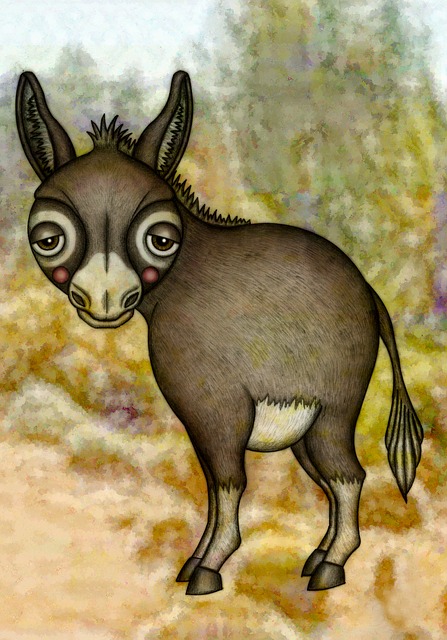
Hey donkey, “cries a man clinging to a branch on top of an aging fruit tree. I found it! I found some lunch if only I can reach it.

“Hee Haw! Hee Haw!” echoes donkey’s frantic cries.

Coming closer, walks a woman on her way to market. Looking up, shocked and stunned, she sees a young man creeping along a branch less than half the size of his wrist.

“Hey you!” cries the woman. “Seriously! Stop! Don’t move!  Breath only if you have to!”

Looking down, the young man waves. Turning his attention back to his still dangling meal, he creeps forward.

“Noooooooo!” she cries. “You won’t make it! Go back!”

“What,” he cries.

“Creek” groans the tree.

“Hurry! Get back! You’re going to fall!” screams the woman.

“Crrrra-a-a-ack!” snaps the tree. 

“Noooooo!” she cries.

Bam. He hits the ground.

“O00-0-0uch!” he cries.

“Are you ok?” she asks.

“Wow! You were right! I fell!”, he exclaims rubbing his elbows.

“How did you know?” he asks, returning to his feet.

She shakes her head. “Are you ok?” she asks.

Ignoring her, he continues; “I know, you are a fortuneteller! I’ve heard all about people like you! Please, please tell me my fortune! I want to hear another fortune!”

“No! I am not a fortuneteller,” she sputters. “Anyone could see that the branch was too thin for a man your size. Now please, go away. I have things to do.”

“No really, you are amazing. You are the best . . . and, well only. . .  but still the best fortuneteller I have ever met. Please! Please! Really, please, tell me my fortune!”

Realizing that he was not going away anytime soon, she devises a plan.

“Ok. When your donkey takes his third drink of water, you will die,” she replies.

Without saying good-bye, she turns. She leaves.

“Thank you . . . ” he calls after her.

Ignoring him, she walks on down the road.

“Oh my!” he cries. “I am going to die. That’s it. It’s all over with. As soon as my donkey takes three drinks of water, I’m dead.”

Realizing he now has microscopically little time he has left; he decides to enjoy it.

Then idea hits him, rather like the ground only minutes before.

“Wait!” he cries to himself. “She said I will die when my donkey takes his third drink of water.  She is brilliant! She just told me how I can live forever! I got it! If my donkey only takes two drinks of water, and not the third, I can do it! I can live forever!” he exclaims.

Smiling, he and his donkey walk on down the road.

“Ouch!” he cries, touching the back of his neck, “I’ve been stung by the sun.”

Seeing a small pond surrounded by a grove of trees, he challenges his donkey to a race.

“On your mark! Get set! Go!” cries the young man.

Splash! He and his donkey tumble into the water. Shaking themselves off, they find a soft pile of moss under a nearby shade tree. Lying down they fall asleep.

Waking up, the young man and the donkey take another drink of water.

“Oh no!” cries the young man. “He took another drink. This is his second one! There is no more water for either one of us. This means I am going to live forever!”

Walking along the road they come to the edge of a river. Thirsty from the afternoon’s walk, the young man and the donkey take another drink of water.

“Oh no!” cries the young man! “This is it! It’s all over with! This is his third drink of water. I’m dead. Only I’ve never died before. No one told me how to do it.”

Pausing, he scratches his head. Another idea hits him, much like the ground did earlier in the day.

“I know!” he cries. “I will lie down, fold my arms across my check and close my eyes. Rather like Aunt Merna did before they dropped her into the ground.”

The donkey shook his head.

Finding a soft spot alongside the road, he lies down. He folds his arms across his chest. He closes his eyes.

A short time later, two men come walking along. Seeing someone lying in the road they stop to see if they can be of assistance. Looking down, they see a young man lying down with his eyes closed, his arms folded.

Glancing at each other, one looks to the other. “He must be dead,” says one man.

“He has to be dead,” comments the other man.

“Of course he is dead. His arms are folded across his chest,” says the first.

“True,” comments the other man.

“A coffin! We need a coffin,” cries the first man.

“Who has a coffin?” asks the other man.

“It’s an emergency, we need a coffin!” they both cry.

Glancing nervously at each other, they realize no one is around to hear them.

“But wait,” cries the first man. “We can go back to the town we just passed and find a coffin there.”

“Yes!” agrees the other man.

It was decided. They turned around and headed for town. When they arrived, they got a coffin and returned to the young man alongside the road. Loading him in to the coffin they remembered a burial ground just before the next town. Lifting the coffin high upon their shoulders they traveled on down the road.

Coming to a fork in the road on man turned right while the other one turned left.

Traveling behind them the donkey stops. The donkey shakes his head.

“No, no! The graveyard is this way!” cried the first man.

“No! It’s that way,” cries the second man.

“No! I am sure it is this way!” cried the first man.

“No!” cried the second man.

With all the arguing, enough was enough; living or not.

Lifting the lid of the coffin, the young man sits up. “No! You’re both wrong. You already passed the road to the graveyard! It’s back there about a quarter of a mile,” he cries.

Having never encountered the talking dead, the two men, started and frightened, drop the coffin. Without a word or a glance between them or behind them, the two men race down the road.

While no one really knows, one often wonders if the second bump to his head helped straighten it out a bit. One can only hope he returned home a bit wiser than he was when his journey began.

Until next time . . . Let Your Storyographer’s Journey Begin!


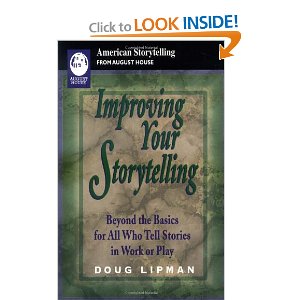
Improving Your Storytelling Beyond the Basics for All Who Tell Stories in Work and Play


Doug Lipman’s book Improving Your Storytelling is both comprehensive and inspirational. His work addresses virtually every aspect of storytelling from performer preparation, to audience interaction, listener significance, voice care, oral language exercises, story crafting and image enhancement. Being introduced to Doug Lipman’s work at the beginning of my storytelling journey, while written primarily for experienced storytellers, gave me an incredible introduction into both the dynamics and art of storytelling. A veteran in the field of Behavior Health and Forensic Therapy, I found the chapters on imagery and oral language vs written language invaluable in my work with clients and how story, professionally or personally crafted, is developed through repeated tellings and listener interaction. Lipman’s masterful explanation of his MIT (Most Important Point)formula greatly impacted my work in the behavior health field as well as inviting me to put “who I am” into my stories. His inspirational chapter on imagery further ignited my imagination in “trying on” various characters and what it might “feel like”‘ to become these alter egos. Reading his vivid, sensory filled words in the introduction to Snow White I sat back wondering, imagining . . . What if I were the evil Queen, peering through this ebony black defined window pain; staring intently into the mesmerizing back drop of winter’s whiting perfection, my heart welling with the immense satisfaction of my husband’s timely demise . . . ! Then moving from here into the inner essence of each character in the story. Wow! What an incredible experience and insight into the breathing life dynamics of story interlaced with the interactive nature of storytelling. A must read for anyone desiring to expand their awareness and skills in the areas of oral language, imagery, and story as well as the dynamics and art of professional storytelling.

Thank you Doug Lipman for this comprehensive, dynamic and inspiring guide into the field of storytelling!


Until next time . . . Let Your Storyographer’s Journey Begin!

Folktales Impacting Nature’s Conservation


botoFor centuries stories and storytelling have played critical roles in preserving, transmitting and changing cultural standards and values on to its people. Storytellers, once high-ranking on the “Most Wanted” to be captured list for invading armies. Too, highly paid entertainers in the local lavatories – I guess if you are just sitting there, you might as well be entertained! Storytellers, the keeper of the stories, the newscasters, the culture bears, the genealogists and the historians of ages past.

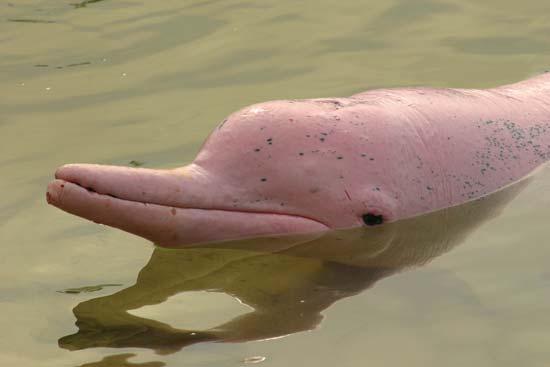
While researching some of the folktales for my Bug-a-Bration Bug Swapin’ Tale and Tunes and Luminous Lagoon: Buggy Tales and Tunes I became acutely aware of how much of the rain forest in different had been destroyed in my lifetime. In crafting the story-line and the Afro-Caribbean folktales for two kids storytelling CD’s, I developed these stories around  the geological context of the type of rain forests in the countries where the stories were told. After collecting basic information on the history of the rain-forests, their endemic and endangered species, including insects, and other fun plants, I began adding them in to the story-line, as a tribute to these amazing creatures and the world they live in, as well as honoring the integrity of these stories. As a result, I got to meet wonderful creatures such as the boto, pictured above, or the pink river dolphin found in the Amazon rain forest as well as black pineapples, lemon tasting termites and the Victoria Rega, a six-foot giant waterlily. In the limestone rainforest of Jamaica ; the lampid firefly, stinking toe trees and cho cho’s, as well as Luminous Lagoon in different section of the island.

Through my research I learned that the Amazon river’s Boto, or pink river dolphin, is endangered.  Local stories and legends gave the people warnings of what might happen if they did not take care of the river. For it was said if anyone hurt the river in any way, the Boto  would come to the land in the form of a human. In this new form, the Boto would visit the village of the offender and cause unwanted pregnancy,  war and other types of illnesses as punishment for hurting her waters. One Amazonian man interviewed wisely said: “When people stopped believing the folktales and legends, they stopped taking care of the rivers and the land.”

Until next time . . . Let Your Storyographer’s Journey Begin!